






Trending Topics:
Notícias em
destaque
Article Session
Ebook Session
Filtrar por tipo:
Open Finance: new rules expand the non-redirect journey (JSR) and strengthen oversight of data partnerships
INAEP Opens Public Consultations on Resources and Risk Classification
Who is held accountable when an algorithm determines who will be laid off?
Net benefit or full benefit? What has CARF decided on COSIT Ruling 12/22?
Ebook - What you need to know about redata
Law No. 15,506/2026 Enacts the National Policy on Critical and Strategic Minerals
Senate approves Bill No. 2,780/24 establishing the National Policy on Critical and Strategic Minerals
CEIS's New Law: Understanding the Main Points
New Framework for Critical Minerals Advances in Congress and May Transform the Mineral Sector
Mercosur Trade Facilitation Agreement enters into force in Brazil and is expected to streamline foreign trade
ANS sets up committee to regulate discount cards
Ebook: COP30 in Belém - Brazil at the center of global climate action
Ebook: Data center regulation - Brazil advances in its digital strategy
Ebook: what changes in the rules regarding public offerings (OPAs) starting in October?
Ebook: What changes in the IOF and what are the points of attention
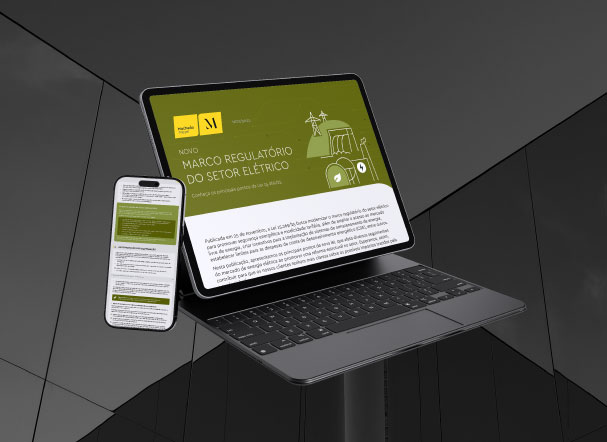
Ebook: The main points of the new reform of the electricity sector
Ebook: Law establishes the Energy Transition Acceleration Program
Ebook: The rules for international transfers of personal data
E-book: all about the new carbon market framework in Brazil!
Ebook: Get to know the main points of the new law regulating offshore power generation
Ebook: Legal Framework of Insurance
Ebook: proposed changes in the SAC decree
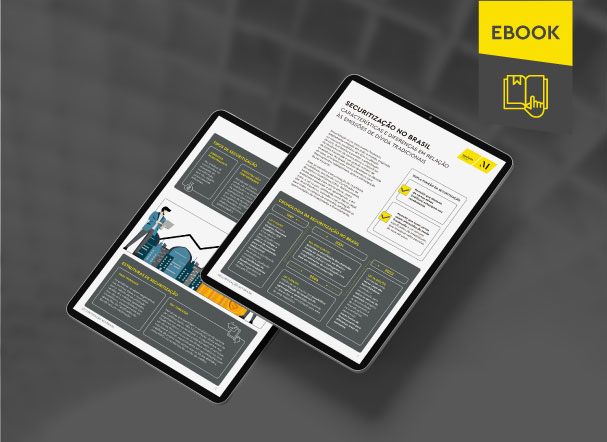
Ebook: Securitization in Brazil
End of the 6x1 shift schedule: What changes with the STF’s decision, and what should companies expect?
Open Finance: new rules expand the non-redirect journey (JSR) and strengthen oversight of data partnerships
INAEP Opens Public Consultations on Resources and Risk Classification
Who is held accountable when an algorithm determines who will be laid off?
Net benefit or full benefit? What has CARF decided on COSIT Ruling 12/22?
Ebook - What you need to know about redata
Law No. 15,506/2026 Enacts the National Policy on Critical and Strategic Minerals
Senate approves Bill No. 2,780/24 establishing the National Policy on Critical and Strategic Minerals
CEIS's New Law: Understanding the Main Points
New Framework for Critical Minerals Advances in Congress and May Transform the Mineral Sector
Mercosur Trade Facilitation Agreement enters into force in Brazil and is expected to streamline foreign trade
ANS sets up committee to regulate discount cards
LEGISLAÇÃO FEDERAL | TRANSFERÊNCIA DE CRÉDITOS DE ICMS EM OPERAÇÕES INTERESTADUAIS ENTRE ESTABELECIMENTOS PERTENCENTES À MESMA PESSOA JURÍDICA
O Convênio ICMS 178/23, publicado em 1º de dezembro, regulamenta a transferência de créditos de ICMS em operações interestaduais entre estabelecimentos pertencentes à mesma pessoa jurídica.
A origem desse convênio remonta à decisão da Ação Declaratória de Constitucionalidade nº 49 (“ADC 49”) proferida pelo Supremo Tribunal Federal (“STF”) em 2021, que considerou inconstitucionais os dispositivos que estabeleciam a incidência do ICMS na transferência de mercadorias entre estabelecimentos do mesmo contribuinte.
Quanto ao Convênio ICMS nº 178/2023, trata-se, basicamente, da reedição do Convênio ICMS nº 174/2023 que foi rejeitado pela “não” ratificação do Poder Executivo do Rio de Janeiro, o qual defendia que o creditamento do imposto nessas operações seria uma faculdade do contribuinte e não uma obrigatoriedade.
A despeito da referida objeção, o Confaz aprovou o Convênio ICMS nº 178/2023 com uma redação semelhante à do Convênio ICMS nº 174/2023, mantendo a previsão de que a transferência de crédito de ICMS em remessas interestaduais seja obrigatória.
A única alteração identificada diz respeito ao quórum de aprovação do Convênio, não mais se sujeitando à unanimidade com a exclusão da menção à Lei Complementar nº 24/75.
Nesse sentido, conforme disposto na cláusula oitava, o Convênio entrará em vigor na data da sua publicação no Diário Oficial da União, e não mais de sua ratificação nacional. A produção dos efeitos se dará a partir de 1 de janeiro de 2024.
Outro ponto que chama a atenção é a ausência de assinatura do Estado do Amazonas e o referendo pelo estado do Rio de Janeiro, que semanas antes rejeitou o Convênio ICMS 174/23.
Assim, é importante seguirmos acompanhando as reações dos Estados à aprovação do Convênio, bem como a sua internalização nas normas estaduais.
(Convênio ICMS nº 178, de 1º de dezembro de 2023, DOU-I Ed. Extra 01.12.2023. Disponível em: <íntegra>. Acesso em: dez. 2023)