Publications

The agency should have more diversified actions this year, focusing on regulated sectors, cartels in public procurement, and transactions between companies in the digital economy.
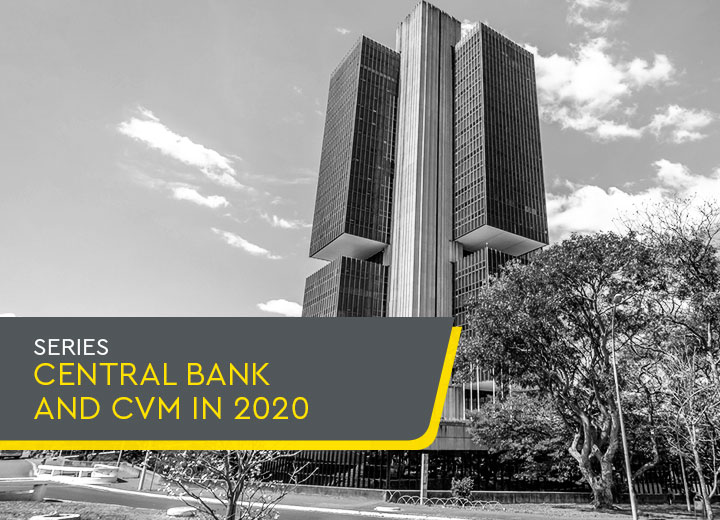
In a new series of articles, we look at the changes that should affect the Brazilian Financial System in the coming years.

The Central Bank of Brazil (BCB) opened for public consultation, on November 28, drafts of a joint regulatory act of the National Monetary Council (CMN) and the BCB and a BCB Circular dealing with the introduction of a “Controlled Testing Environment for Financial and Payment Systems Innovations” (Regulatory Sandbox) under the National Financial System and the Brazilian Payments System.[1]

The Labor Reform (Law No. 13,467/17) amended article 899, paragraph 11, of the Consolidated Labor Laws (CLT) to, among other things, enable the use of a judicial surety bond or bank surety to substitute for an appeal deposit, an alternative that had already been accepted by the Labor Courts to guarantee enforcement of judgment.

The decision regarding the exclusion of ICMS tax from the PIS and Cofins tax calculation bases, currently one of the most anticipated tax issues in Brazil, was postponed by the Federal Supreme Court (STF) on November 28 and there is no forecast for when it will be handed down. As issue is the judgment of the motion for clarification filed by the National Treasury in the case Imcopa (RE 574706), in which the theory was set that there was general repercussion in whether the ICMS tax is not a part of the calculation basis for the assessment of the PIS and Cofins taxes. Among allegations of omissions and contradictions, the National Treasury requested softening of the effects of the judgment, so that it produce effects only after the judgment of the motions for clarification. Due to the enormous relevance of the case, once again the softening effects has gained prominence in the Brazilian tax scenario.

Approximately 20 years after the first federal and state programs for highway concessions for the private sector, the concession agreements then entered into between the public administration and the operators of these sections will soon expire and there is much expectation regarding what measures will be taken in relation to them.
Page 165 of 241