Environmental
Ordinance No. 01/2017 of the Genetic Heritage Management Council (CGEN) and Federal Law No. 13,123/15 (the new legal framework for biodiversity, which repealed Presidential Decree No. 2,186-16/2001) established the date of November 6, 2018, as the final deadline for regularization or adaptation in the National System of Management of Genetic Heritage and Associated Traditional Knowledge (SisGen).
The Brazilian Institute for the Environment and Renewable Natural Resources (Ibama) published on August 14, 2018, Normative Instruction (IN) No. 18/2018, in order to allow more covered parties to join the fines conversion program. The new standard changes the transition rules set out in IN 06/2018 and, in practice, extends to 60 days the period originally established for covered parties to submit their requests to convert fines. With the change, adherence to the program may be requested until October 15, 2018.

Polychlorinated biphenyls, known as PCBs, are synthetic substances formed by a mixture of 209 chlorinated compounds. The Stockholm Convention, of which Brazil is a signatory, has classified PCBs as one of the twelve types of persistent organic pollutants (POPs), which are extremely polluting substances, which pose serious risks to the environment and human health and which should be phased out, according to the convention.
Two new regulations issued by the Brazilian Institute of the Environment and Renewable Natural Resources (“Instituto Brasileiro do Meio Ambiente e dos Recursos Naturais Renováveis” - IBAMA) regulate the Federal Technical Register of Potentially Pollution Activities (CTF/APP). Effective as of June 29, IN No. 11/2018 and IN No. 12/2018 have brought about significant changes in the framework of activities subject to registration with the CTF/APP, unlike previous Ibama instructions published on the subject.
The Federal Supreme Court (STF) has recognized the existence of general repercussion of an appeal regarding the inapplicability of the statute of limitations on a claim aiming at civil compensation for environmental damage, in a judgment issued on June 1, 2018. Most of the Justices agreed with the reporting judge's opinion.
Decision No. 076/2018/C by the Board of Directors of the Environmental Agency of the State of São Paulo (Cetesb), which conditions the issuance or renewal of environmental licenses on the structuring and implementation of reverse logistics systems, accordance with the procedures set forth in the rule, will enter into force on June 4th.
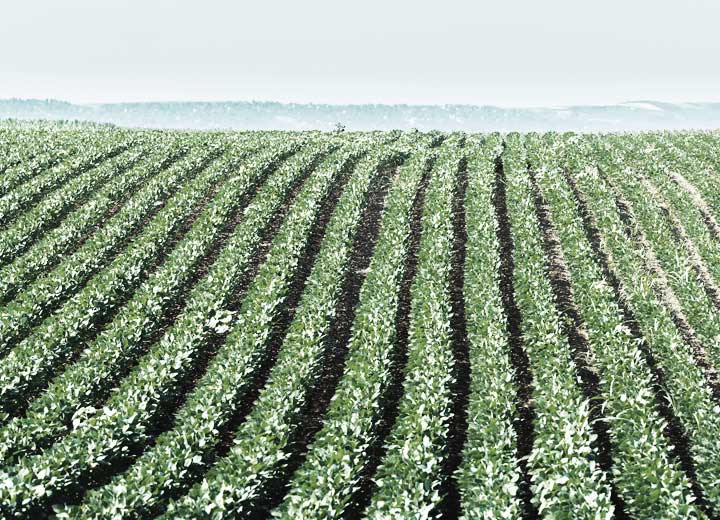
Brazil is considered a country with natural characteristics favorable to agribusiness. With its 8.5 million square kilometers, it is the largest country in South America, the fifth largest in the world, and it has the potential to expand its agricultural capacity without the need to harm the environment.
The Strategic Environmental Assessment (AAE) has been causing concern among companies for some time. This is because, although this study is not legally required for environmental licensing of potentially polluting activities, the absence of the AAE has been viewed by some environmental agencies as an obstacle for the issuance of environmental licenses.

The Environmental Company of the State of São Paulo (Companhia Ambiental do Estado de São Paulo or “Cetesb”) has already been demanding the payment of the charge for the issuance of technical advice on intervention plans for the reuse of contaminated areas. The charge starts at 750 São Paulo State Fiscal Units (UFESPs), which is currently equivalent to R$ 18,802.50. Such amount must be added to the result of a formula that involves the factor of complexity of the sources of pollution provided for in State Decree No. 8.468/1976, and the total area of the undertaking.
Although the private sector in Brazil is aware of the opportunities for concessions and public-private partnerships related to classic public services and the execution of infrastructure projects, these forms of transactions are still little used for environmental conservation.
The Federal Attorney's Office of the Brazilian Institute for the Environment and Renewable Natural Resources – IBAMA, acknowledged on August 2, 2016, that a change in the ownership of environmental licensing processes is possible at any time, since the object of the licensing is the enterprise, the work, the establishment, or the activity, not the individual or legal entity that requests it. The agency’s decision follows a theory that was already supported in legal scholarship and was practiced by environmental agencies throughout Brazil.
Daniela Stump, Liliam Yoshikawa, and Daniel Guariento The Public Prosecutor of Minas Gerais ("MP/MG") filed, on April 11, 2016, Public Civil Action No.
Page 7 of 7